

Affiliate disclosure: This guide contains affiliate links. As an Amazon Associate, we earn from qualifying purchases at no extra cost to you. Learn more.
2026-09-30 · News and analysis
Affiliate disclosure: This guide contains affiliate links. As an Amazon Associate, we earn from qualifying purchases at no extra cost to you. Learn more.
ModRetro announced yesterday that it is working with OpenAI on game creation for the Chromatic, its FPGA Game Boy handheld. The pairing is ModRetro's hardware and Codex, OpenAI's coding agent.
The output so far is 13 Game Boy Color games sitting on OpenAI's developer site. They play in a browser and they download as real .gbc ROM files. They are free.
The reaction has mostly been about whether AI generated Game Boy games are worth anything, which is a fair argument to have. It is also skipping the part of this that actually matters if you own a Chromatic, which is that there is now a documented path from a text prompt to a flashed cartridge.
The Short Version
- It is real and it is live. 13 games on OpenAI's developer site, playable in a browser or downloadable as
.gbcfiles. - They are free, and they are not cartridge releases. These are not part of ModRetro's paid first party library.
- The hardware giveaway was the actual launch. Limited edition transparent Chromatics went to OpenAI DevDay attendees, with a custom Codex plugin.
- One hit eBay at $4,000 inside 90 minutes of Sam Altman announcing it.
- The games are previews. At least one ROM's own filename calls itself a three level preview.
- The backlash is real but thinly sourced. The widely cited claim that past Chromatic developers are unhappy names no developer and quotes none.
- The genuinely useful part is the tooling. A Codex plugin that targets Game Boy Color, plus community firmware that can flash homebrew to Chromatic carts.
What Was Actually Announced
ModRetro's own post is short. It says the two companies are collaborating on game creation for the Chromatic, and that the partnership brings together ModRetro's handheld hardware and Codex. It came with a half minute video and has done a bit over 109,000 views.
The substance lives on OpenAI's developer site, which hosts the games. All 13 are described as built with Codex for Game Boy Color:
FlapGPT, Ash & Oath, Codex Land, Arc Pocket, Seedy's Sweet Garden, Swarmfall, Hollow Descent, Cairn & Cinder, WhoadexWare, Fetch Frenzy, Pizza Dash, Cloudfall and Ember Escape.
Each has its own page with a browser player, which needs Canvas and WebAssembly, and a ROM download. The files are plain .gbc, targeting Game Boy Color and the Chromatic.
Worth setting expectations honestly: these are demos. The Codex Land download is named as a three level preview in the filename itself. FlapGPT is what the name suggests. Nobody is claiming these are finished games, and the page frames them as what the tool produced rather than as a release slate.
The Hardware Is the Part People Are Chasing
The games are free. The handheld is not, and that is where the attention went.
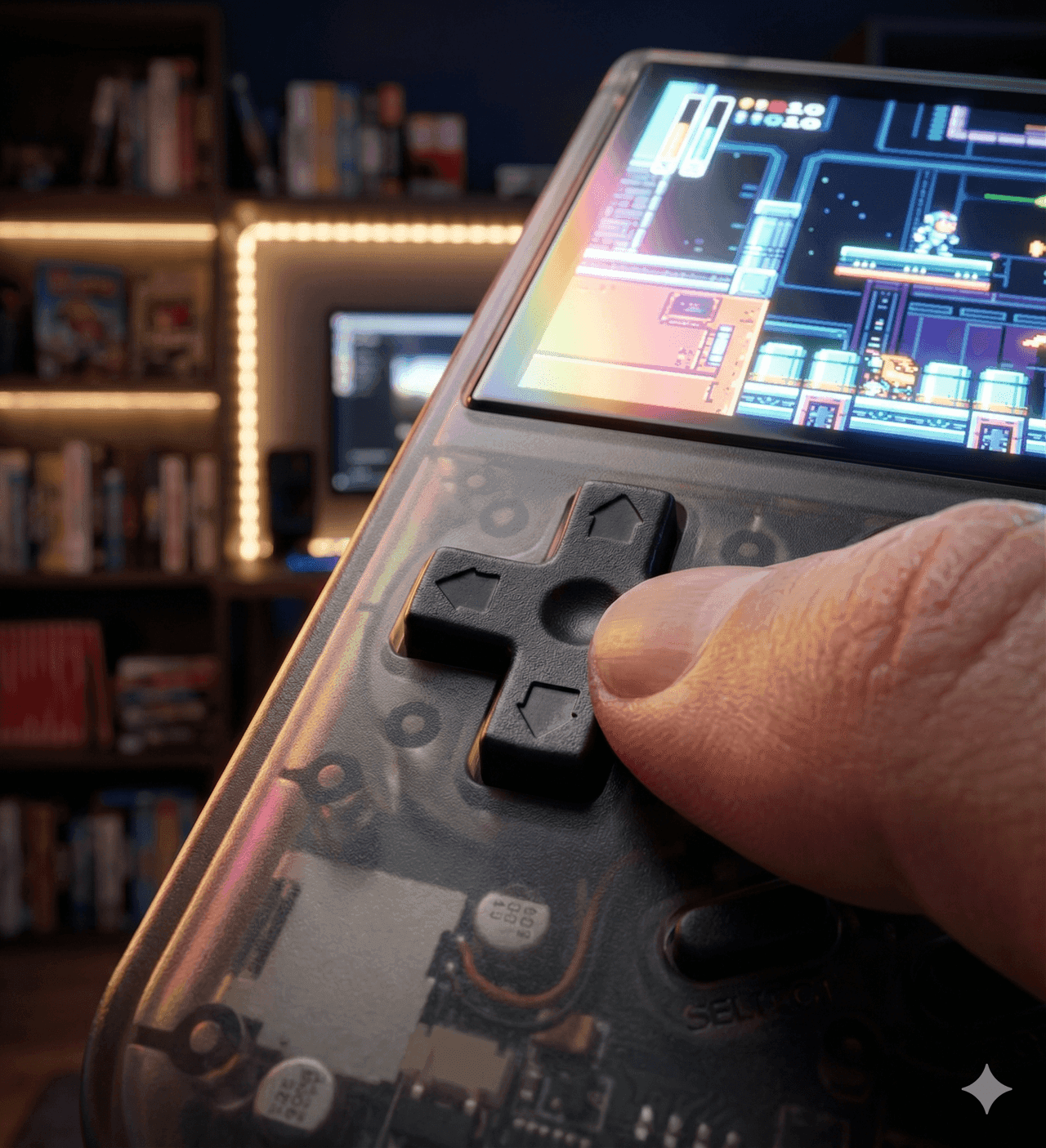
ModRetro made a run of limited edition fully transparent Chromatics for OpenAI DevDay and gave them to attendees, along with the custom Codex plugin. Reports put the run at 8,000 units, though at least one eBay listing describes its unit as numbered 1 of 2500, so the real allocation is not clear.
What is clear is the resale. One appeared on eBay at $4,000 within 90 minutes of Sam Altman announcing the collaboration on stage.
If you want a Chromatic, buy a normal one. It is the same handheld in an ordinary shell, and we rated it 4.3 in our ModRetro Chromatic review. A DevDay unit is a collectible with a logo on it, priced by scarcity rather than by anything it does.
These Are Not Chromatic Library Releases
This distinction is getting lost and it matters.
ModRetro sells real Game Boy cartridges. When it shadow dropped Earthworm Jim and Rayman 2 Forever in August, those were licensed games on physical carts that also run on original hardware, and they took the first party library to 23 titles. That library is the strongest argument for buying the device.
The Codex games are not that. They are free browser and ROM downloads on a developer marketing site, built to show what the tool can do. Adding 13 to 23 is not how this works.
Why Game Boy Color Is a Genuinely Hard Target
Here is the part that makes this more interesting than a stunt.
Game Boy Color is a brutal platform to write for. You get 32KB of work RAM, a CPU that tops out around 8 MHz in its faster mode and has no floating point maths, sprites limited to three colours plus transparency, tile based graphics with per tile palette limits, and a hard cap on how many sprites can appear on a single scanline. There is no engine doing the hard parts for you. Getting anything to run at all means respecting a long list of constraints that have not mattered anywhere else since about 1999.
So "can a coding agent hit that target" is a real technical question, not a rhetorical one. The answer visible on that page is that it can produce something that boots and plays in a browser emulator, in a .gbc container, which is further than most people would have guessed.
What nobody has published is whether these ROMs behave correctly on real hardware. Browser emulators are forgiving about timing in ways an actual Game Boy Color and an FPGA reimplementation are not. Until someone runs these on a Chromatic or a real GBC and reports back, "it runs" means "it runs in the browser player."
Getting One Onto Real Hardware
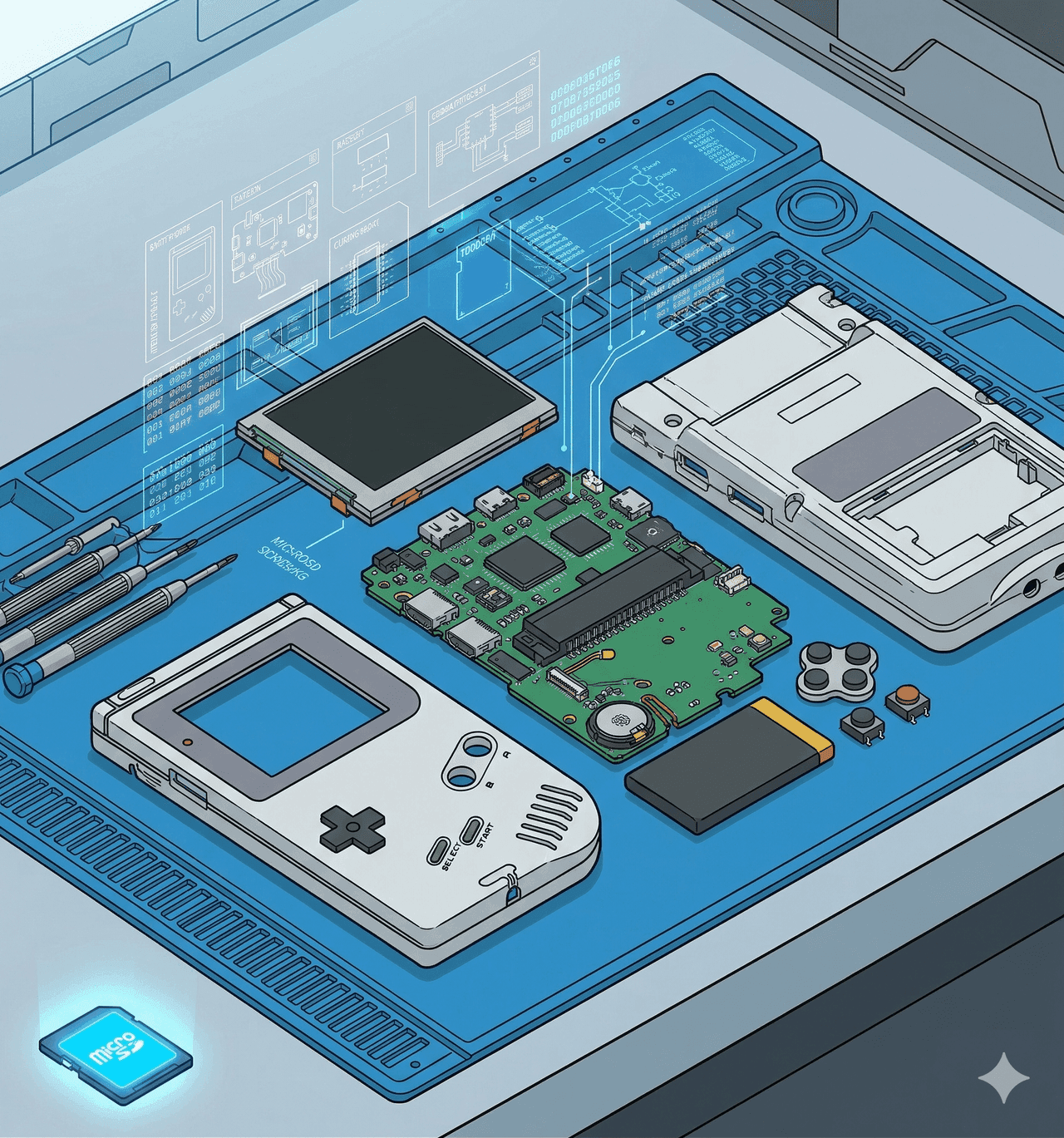
The Chromatic takes cartridges. A .gbc file is not a cartridge, so there is a step in the middle.
Two routes exist.
ModRetro's own plugin. The Codex plugin is built to target Game Boy Color and the Chromatic, and ModRetro publishes a DevDay Edition quickstart guide on its support site covering the workflow. We could not load that page, so we are not going to reconstruct its steps from second hand summaries. Go to ModRetro's own documentation for it.
ChroMagic. This is free, open source community firmware for the Chromatic, and it is the more interesting of the two. Its desktop companion, ChroMagician, installs the firmware in two clicks, backs up cartridges, restores saves, manages SD card contents over USB, and flashes homebrew onto Chromatic game cartridges. The firmware itself adds an on device cartridge backup option and a Backups tab that plays backed up games from SD. The project notes that more cartridge types are still coming.
If you would rather stay on original hardware entirely, a flash cart is the normal answer, and our best flash carts guide covers the Game Boy options.
Where We Stand on the AI Part
We have written about AI in this scene several times, and the position has been consistent, so we will apply it here rather than inventing a new one.
AI fan translations got pulled after backlash because they were passed off without disclosure. Emulator projects including mGBA banned AI generated pull requests because reviewing plausible looking wrong code costs maintainers more than writing it themselves. In the recomp scene, disclosure turned out to be a decent quality signal, and the projects that said what they used were generally the better ones.
The thread through all of that is disclosure and output quality, not a blanket objection to the tool. By that standard this announcement does fine on disclosure. It is labelled, loudly, on the page and in the post. Nobody is pretending a human wrote FlapGPT.
The quality question is separate and genuinely open. RetroDodo's write up calls the games slop and says they provide nothing but a migraine, which is a reasonable thing to say about a batch of preview builds made to market a coding agent. It also asserts that past Chromatic developers are unhappy about this, and it names none of them and quotes none of them. That claim may well be true. It is not sourced, so we are reporting it as an assertion rather than as a fact about how developers feel.
The thing we would actually watch is whether any of this produces a finished Game Boy Color game that someone ships on a cartridge. Thirteen previews on a marketing page is a demo. One complete game that holds up on real hardware would be an argument.
The Bottom Line
The games are real, free, and worth ten minutes in a browser if you are curious about what a coding agent does with a 1998 constraint set.
The transparent handheld is a collectible and it is already being flipped at absurd prices. Buy the ordinary one.
The lasting part is the pipeline. A plugin that targets Game Boy Color, community firmware that can write homebrew to Chromatic cartridges, and a device that plays the result on FPGA hardware is a real homebrew loop. Whether AI is the thing feeding it is up to whoever sits down at it.
Questions People Ask
Are the ModRetro OpenAI Codex games free?
Yes. All 13 are on OpenAI's developer site, playable in a browser and downloadable as .gbc ROM files at no cost. They are original works published by the collaboration, not commercial ROMs.
Are these part of the ModRetro Chromatic game library?
No. ModRetro's first party library is licensed games on physical Game Boy cartridges, which stood at 23 titles as of August 2026. The Codex games are free downloads on a developer marketing site and are not cartridge releases.
Do the games run on a real Chromatic or Game Boy Color?
They are built and distributed as .gbc files targeting Game Boy Color and the Chromatic, so they are meant to. Nobody has published results from running them on real hardware, and browser emulators are more forgiving about timing than an original console or an FPGA reimplementation, so treat hardware compatibility as untested for now.
How do I get one of these ROMs onto a Chromatic?
The Chromatic takes cartridges, so a ROM file needs writing to one. ModRetro documents its own Codex plugin workflow on its support site. Separately, ChroMagic, a free open source community firmware, has a desktop app called ChroMagician that can flash homebrew onto Chromatic game cartridges as well as back up carts and saves.
What is the transparent DevDay Chromatic worth?
Whatever someone pays, which is the problem. One was listed on eBay at $4,000 within 90 minutes of the announcement. It is a limited edition shell on the same hardware as a retail Chromatic, so there is no functional reason to chase one.
Is Game Boy Color actually a realistic target for AI generated code?
It is a hard target. 32KB of work RAM, a CPU that tops out around 8 MHz in its faster mode with no floating point, tight per tile palette limits and a sprite cap per scanline, with no engine handling the difficult parts. Producing something that boots at all is a meaningful result. Producing a complete game that behaves correctly on real hardware is a much higher bar and has not been demonstrated yet.
Are Chromatic developers actually upset about this?
That claim is circulating and it is not sourced. The article most often cited for it states that past Chromatic developers are unhappy, but names no developer and includes no quotes. It may be accurate, but as of 30 September 2026 nobody has gone on record.
Does heldgames have a position on AI generated games?
Our consistent line across AI fan translations, emulator projects banning AI pull requests and the recomp scene is that disclosure and output quality are what matter, not the tool. This announcement is clearly disclosed. The quality question is open, and the test we would apply is whether anyone ships a finished Game Boy Color game on a cartridge out of it.
Related Reading
- ModRetro Chromatic Review
- ModRetro Shadow Dropped Earthworm Jim and Rayman 2 on Game Boy
- Analogue Pocket vs ModRetro Chromatic
- Best Flash Carts for Retro Consoles
- The Recomp Scene Split Three Ways Over AI
- Emulator Projects Are Banning AI Generated Code
- AI Fan Translations Are Splitting the Romhacking Scene
- 21 Best Free Homebrew Games for Retro Handhelds
Written 30 September 2026. The announcement and its engagement figures come from ModRetro's post on X of 29 September 2026. The game list, formats and descriptions come from OpenAI's developer site, retrieved 30 September 2026, where 13 games were listed; some coverage counts nine. The DevDay giveaway and unit count come from third party posts and are unconfirmed, with reports of 8,000 units and an eBay listing numbered 1 of 2500. The $4,000 resale figure is as reported by daily.dev. Developer reaction is from RetroDodo's 30 September 2026 article, which asserts developer unhappiness without naming or quoting anyone. ChroMagic and ChroMagician details come from chromagic.org. We have not run any of these ROMs on real hardware, and we publish no compatibility claims for them.
Related reading
 GuideGuide
 Review