
Affiliate disclosure: This guide contains affiliate links. As an Amazon Associate, we earn from qualifying purchases at no extra cost to you. Learn more.
Onion OS is the premier custom firmware for the Miyoo Mini Plus. This guide walks you through every step from a blank MicroSD card to a fully configured retro gaming machine. Still deciding on the device itself? See how it stacks up in our Miyoo vs RG35XX comparison and our best handhelds under $100 guide.
What You Get With Onion OS
The Miyoo Mini Plus is a great little device out of the box, but the stock firmware is bare. Onion OS changes that. It is a community-built front end that turns the Miyoo into something that feels finished and polished.
Here is what you gain after the install:
- A clean, fast menu with box art, console logos, and game previews instead of plain text lists.
- RetroArch built in with sensible default cores for every major system from NES through PlayStation 1.
- Save states and rewind so you can experiment without losing progress.
- Per-game settings that let you tune controls, shaders, and aspect ratio for each title.
- Box art scraping to pull cover images for your library automatically.
The whole process takes about 20 minutes, and you do not need any technical background. If you can drag files onto a drive, you can do this.
What You Need
- Miyoo Mini Plus
- MicroSD card (32GB–256GB, Samsung or SanDisk recommended)
- Windows, Mac, or Linux computer with a card reader
Step 1: Download Onion OS
Visit the Onion OS GitHub releases page and download the latest .zip file.
Step 2: Format Your MicroSD Card
Format as FAT32. On Windows, use the official SD Card Formatter. On macOS, use Disk Utility → Erase → MS-DOS (FAT).
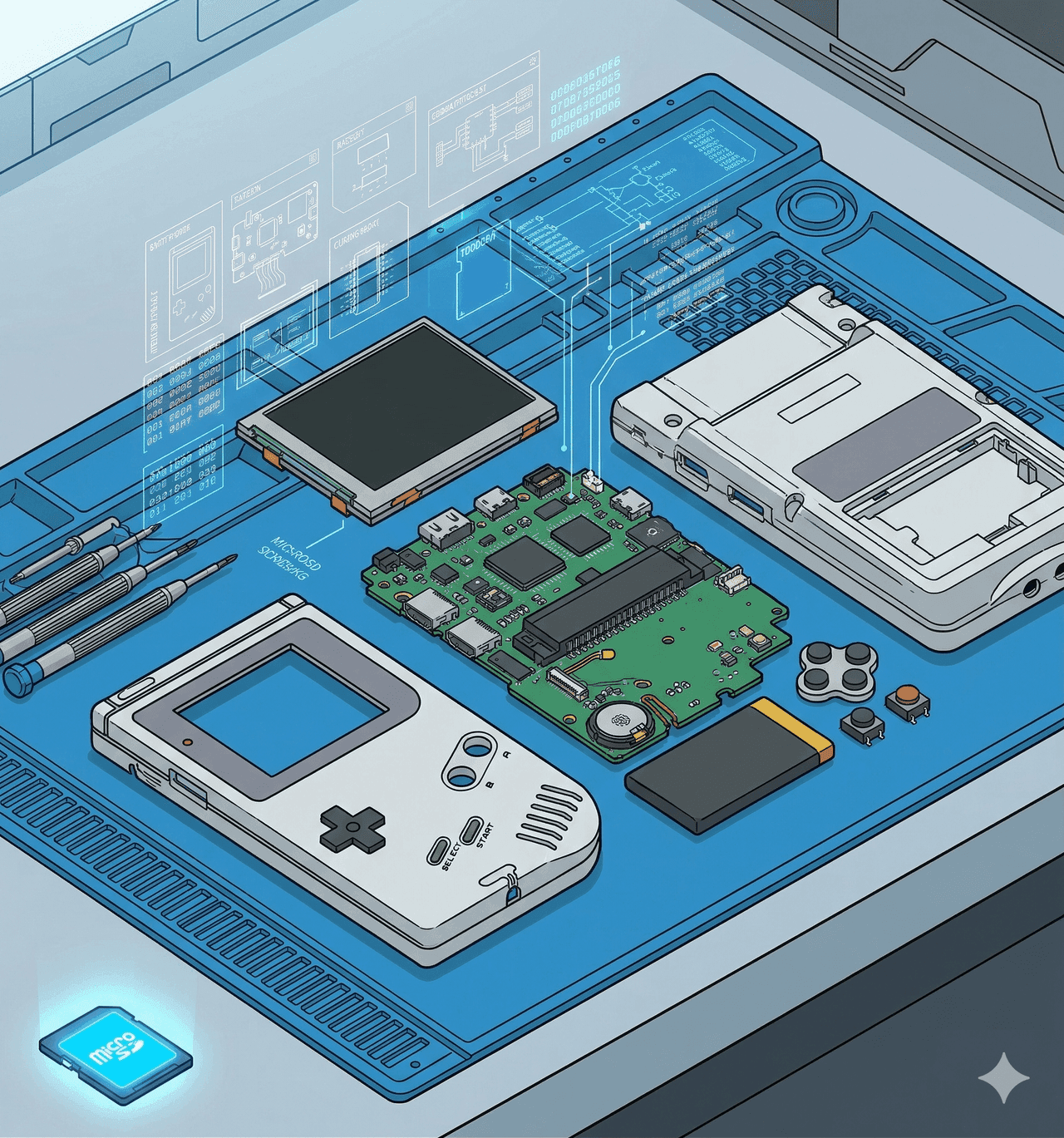
Step 3: Install Onion OS Files
Extract the zip file and copy the contents (not the folder) to the root of your MicroSD card. Your card root should contain folders like App, Emu, RApp, and miyoo.
Step 4: First Boot
Insert the card into your Miyoo Mini Plus and power on. Onion OS will auto-launch an installation wizard. Choose your cores, wait ~2 minutes, and reboot when prompted.
Step 5: Add Your ROMs
Onion OS creates standard ROM folders at the root of your card:
.../Roms/GBA/→ Game Boy Advance.../Roms/SFC/→ Super Nintendo.../Roms/PS/→ PlayStation 1.../Roms/FC/→ NES / Famicom
Copy your legal ROM backups there, launch the Games app, and you're done.
Recommended Settings
- Performance Mode: Enabled (pushes CPU to 1.4GHz)
- Screen Brightness: 7 to 8 out of 10
- Sleep Timeout: 3 minutes
These settings give you the best balance of speed and battery life. Performance Mode matters most for PlayStation 1 and demanding Game Boy Advance games. You can drop the brightness lower to stretch your battery during long sessions.
Updating Box Art
Once your games are loaded, open the Tools app and run the scraper. It matches your ROM file names against an online database and pulls cover art for each game. Clean, accurate file names get the best results. If a game does not match, you can rename the file or add the image by hand later.
Troubleshooting
Most setup problems come down to two things: the card format or the file copy. Work through these before you assume the firmware is broken.
- The device shows a black screen on boot. Re-check that you copied the contents of the zip, not the zip folder itself. The card root should hold the
App,Emu, andmiyoofolders directly. - The card is not recognized. Reformat as FAT32. Cards over 64GB sometimes default to exFAT, which Onion OS will not read.
- Games do not appear. Make sure each ROM sits in the matching system folder, and that the file is a supported format for that console. Refresh the games list from the main menu after copying.
- A game runs slowly. Turn on Performance Mode, then open the in-game RetroArch menu and try a lighter core for that system.
- Saves are not sticking. Use save states from the in-game menu, and always power down through the menu rather than yanking the card.
If a card keeps failing, swap to a known good Samsung or SanDisk card. Cheap no-name cards are the single most common cause of setup headaches.
You Are Ready to Play
That is the whole process. You now have a Miyoo Mini Plus running Onion OS with box art, save states, and tuned performance. Load it up with the games you already own and enjoy. When you are ready for more, our RetroArch shaders guide and best PS1 games list are the natural next steps.
Related reading
 GuideGuideGuide