
Affiliate disclosure: This page contains affiliate links. As an Amazon Associate, we earn from qualifying purchases at no extra cost to you. Learn more.
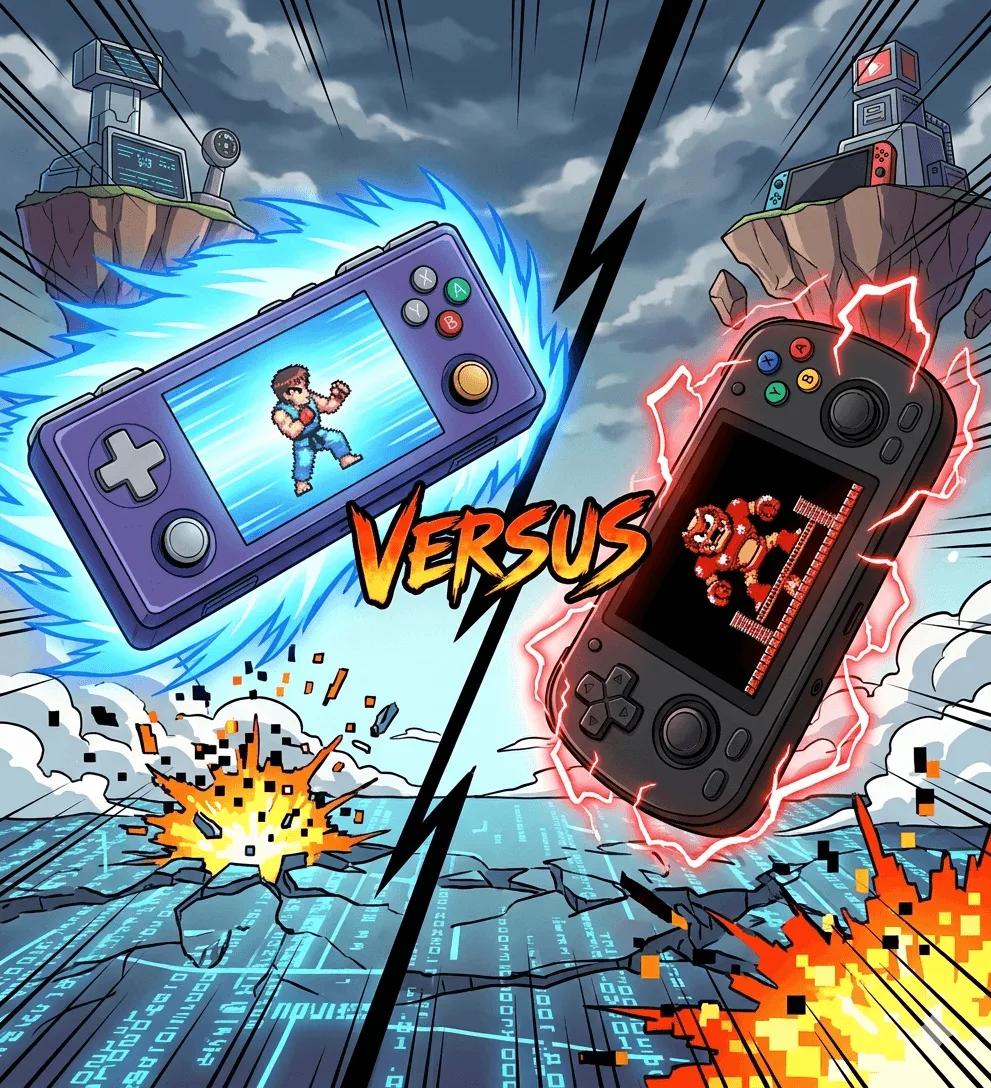
The AYANEO Pocket Micro 2 and the Retroid Pocket Mini are both small, pocketable Android handhelds aimed at people who want real emulation power without carrying a big device. They take different routes to get there. The Pocket Micro 2 leans on a Snapdragon 865 and a sharp 3:2 LCD. The Pocket Mini counters with a vivid OLED and a price that is nearly a hundred dollars lower. Here is how they compare.
Specs Head to Head
| Spec | AYANEO Pocket Micro 2 | Retroid Pocket Mini |
|---|---|---|
| CPU | Snapdragon 865 (Adreno 650) | MediaTek Dimensity 900 |
| RAM | 6GB or 8GB LPDDR4X | 8GB LPDDR4X |
| Screen | 3.5 inch LCD, 960x640, 3:2 | 3.7 inch OLED, 960x640 |
| Battery | 3,950 mAh | 4,000 mAh |
| Controls | TMR sticks, digital triggers | Hall effect sticks |
| Extras | 3.5mm jack, microphone | DisplayPort out |
| OS | Android 13 | Android 13 |
| Price | from $239 | from $149 |
Performance
Both chips are capable, but they have different strengths. The Snapdragon 865 in the Pocket Micro 2 has the edge in mature emulator driver support, which tends to make demanding systems like GameCube and PS2 more predictable. The Dimensity 900 in the Pocket Mini is a strong performer too and covers PS2 and PSP comfortably.
In real use, both clear everything through PSP and Dreamcast without trouble and handle a good slice of GameCube. The Pocket Micro 2's chip has a slightly higher and more consistent ceiling on the heaviest titles, helped by the Adreno 650's well tuned drivers. If you push the hardest PS2 games, the 865 is the safer bet.
Screen
The Pocket Mini's headline feature is its 3.7 inch OLED. OLED gives true blacks and vivid color, and at this small size 2D art and menus look fantastic. It is a clear step up in contrast over any LCD.
The Pocket Micro 2 has a 3.5 inch LCD at 960x640 in a 3:2 ratio. It is sharp and the 3:2 shape frames 4:3 systems neatly, but it cannot match the OLED for contrast. If screen quality is what excites you, the Pocket Mini wins here.
Controls and Extras
Both devices use drift resistant sticks, hall effect on the Mini and TMR on the Micro 2. Neither should develop drift.
The extras differ. The Pocket Micro 2 brings back the 3.5mm headphone jack and adds a microphone, which matters if you want wired audio with zero latency. The Pocket Mini offers DisplayPort out over USB-C, so you can dock it to a TV for big screen play. Decide which of those features fits your use better.
Value
This is the Pocket Mini's strongest argument. It starts at around $149, nearly a hundred dollars less than the Pocket Micro 2, while delivering an OLED screen and capable performance. For pure value, it is hard to beat.
The Pocket Micro 2 costs more and justifies it with the proven 865, a more refined premium build, a headphone jack, and AYANEO's polish. Whether that premium is worth it depends on how much you value the chip and the build over the OLED and the savings.
The Verdict
Buy the AYANEO Pocket Micro 2 if: You want the most proven emulation chip, a premium build, and a wired headphone jack, and you do not mind paying more. It is the more polished, higher ceiling device.
Buy the Retroid Pocket Mini if: You want a gorgeous OLED screen, DisplayPort out, and the best value by a wide margin. It does most of what the Micro 2 does for far less.
Both are excellent small handhelds. The Pocket Micro 2 is the premium, proven pick. The Pocket Mini is the OLED value champion. For most budgets, the Mini is the smarter spend, while the Pocket Micro 2 rewards those who want the better chip and build.
Related reading
 ComparisonComparisonComparison