

Affiliate disclosure: This guide contains affiliate links. As an Amazon Associate, we earn from qualifying purchases at no extra cost to you. Learn more.
2026-07-25 · Preview
Affiliate disclosure: This guide contains affiliate links. As an Amazon Associate, we earn from qualifying purchases at no extra cost to you. Learn more.
MagicX just teased a new handheld, and it has one feature that makes it stand out. The Mini Dream is built around a 3.3 inch OLED screen, and it is set to start at just $80. OLED panels are usually reserved for pricier devices, so seeing one on a budget handheld is a genuine surprise. Here is everything we know so far.
Note up front that this is a preview. MagicX has shared the screen, the price range, and the operating system plans, but very little else. There is no confirmed chipset, no RAM figure, no battery capacity, and no firm release date. The company says the Mini Dream is still in its early stages. We will update this page as more is confirmed and once retail units ship.
What Is the MagicX Mini Dream
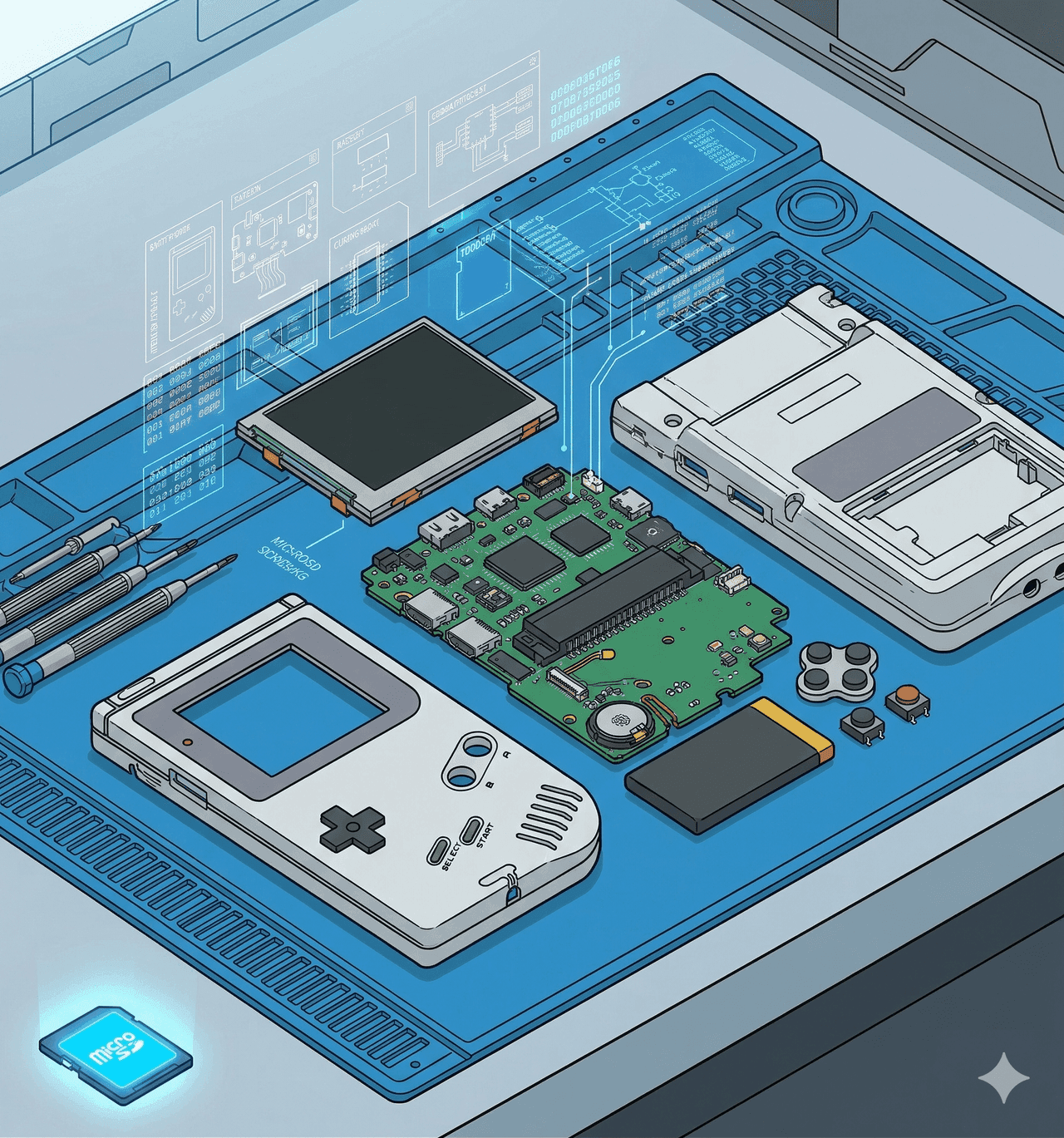
The Mini Dream is a compact vertical handheld with a custom OLED display. That screen is the whole pitch. OLED gives you true blacks, punchy color, and per pixel contrast that a normal budget LCD cannot match. On classic 2D games and Game Boy style libraries, that look is lovely.
MagicX plans to sell it in two flavors. A cheaper Linux version and a pricier Android version. That split mirrors what Anbernic and others already do. The Linux model keeps things simple and focused on retro emulation. The Android model adds app stores, streaming, cloud saves, and native storefronts, which turns the device into a more flexible all rounder.
The price range runs from $80 to $180. The low end is almost certainly the Linux model, and the top end is the loaded Android build. Where each exact configuration lands is not confirmed yet.
MagicX Mini Dream Specs So Far
The specs below come from MagicX teasers and early press coverage. Treat everything as provisional until we test a retail unit. Most of the internals have not been announced at all.
| Spec | Detail |
|---|---|
| Screen | 3.3 inch OLED |
| Resolution | Reported 1024 x 768 |
| Chipset | Not yet announced |
| RAM | Not yet announced |
| Storage | Not yet announced, likely microSD |
| Battery | Not yet announced |
| OS | Two versions, Linux and Android |
| Street price | $80 to $180 depending on version |
| Release | Not yet announced, expected 2026 |
Why the OLED Screen Matters
Almost every handheld under $150 ships with an LCD. Most are fine. A good IPS panel looks clean and bright. But OLED is a different class. Each pixel makes its own light, so black is truly black and contrast is effectively infinite. Colors pop in a way LCD struggles to match.
On a retro handheld that spends its life showing 2D sprites, bold palettes, and dark dungeon scenes, that contrast really shows. If MagicX has tuned the panel well, the Mini Dream could look far more premium than its price suggests. That is the entire reason this device is worth watching.
The open question is everything behind the glass. A gorgeous screen paired with a weak chip and a tiny battery would blunt the appeal. Until MagicX confirms the internals, the OLED is a promise rather than a guarantee.
Who Should Watch for It
The Mini Dream looks aimed at the buyer who wants a small, good looking handheld for classic games without spending big. If your library is mostly 8 bit and 16 bit systems, GBA, and PS1, a well tuned OLED at $80 to $180 is a tempting proposition.
If you need to know the emulation ceiling before you commit, wait for the spec sheet. The systems it can handle depend entirely on the chipset MagicX has not named yet. For now, put it on your watch list and check back.
How It Compares
At this price with an OLED, the closest reference points are the budget OLED handhelds and the Anbernic vertical family. For a sense of what a great small screen adds to retro play, the premium end of that idea shows up in FPGA devices like the Analogue Pocket. The Mini Dream is aiming for that visual wow at a small fraction of the cost.
If you want proven options you can buy today while the Mini Dream firms up, our best clamshell handhelds and best FPGA handhelds guides are good starting points.
Frequently Asked Questions
How much does the MagicX Mini Dream cost?
MagicX has given a range of $80 to $180. The lower price is expected to be the Linux version, and the higher price the Android version. Exact per model pricing has not been confirmed.
When does the MagicX Mini Dream come out?
There is no official release date yet. MagicX says the device is still in its early stages and will share more as it hits key milestones. A 2026 launch is expected.
Does the Mini Dream really have an OLED screen?
Yes. MagicX has confirmed a 3.3 inch custom OLED panel. That is the headline feature and the reason the device is drawing attention at this price.
What can the MagicX Mini Dream emulate?
We do not know yet. MagicX has not announced the chipset, so the emulation ceiling is unconfirmed. We will update this page once the internals are revealed.
Update: There Is Now a Vertical Sibling
In September 2026 MagicX revealed the Pocket Dream, which uses this same 3.3 inch OLED panel and the same four chipset variants in a vertical body measuring 107 x 72 x 22 mm, with dual analog sticks and a 3,500 mAh battery.
It also told us something the Mini Dream reveal did not. The Pocket Dream announcement confirmed the four SoC variants span both Linux and Android, which lines up with the two-version plan described above. Our Pocket Dream preview covers it, including why 72mm is a tight place to put two thumbsticks.
Related Reading
Related reading
 GuideGuideGuide