
Affiliate disclosure: This page contains affiliate links. As an Amazon Associate, we earn from qualifying purchases at no extra cost to you. Learn more.
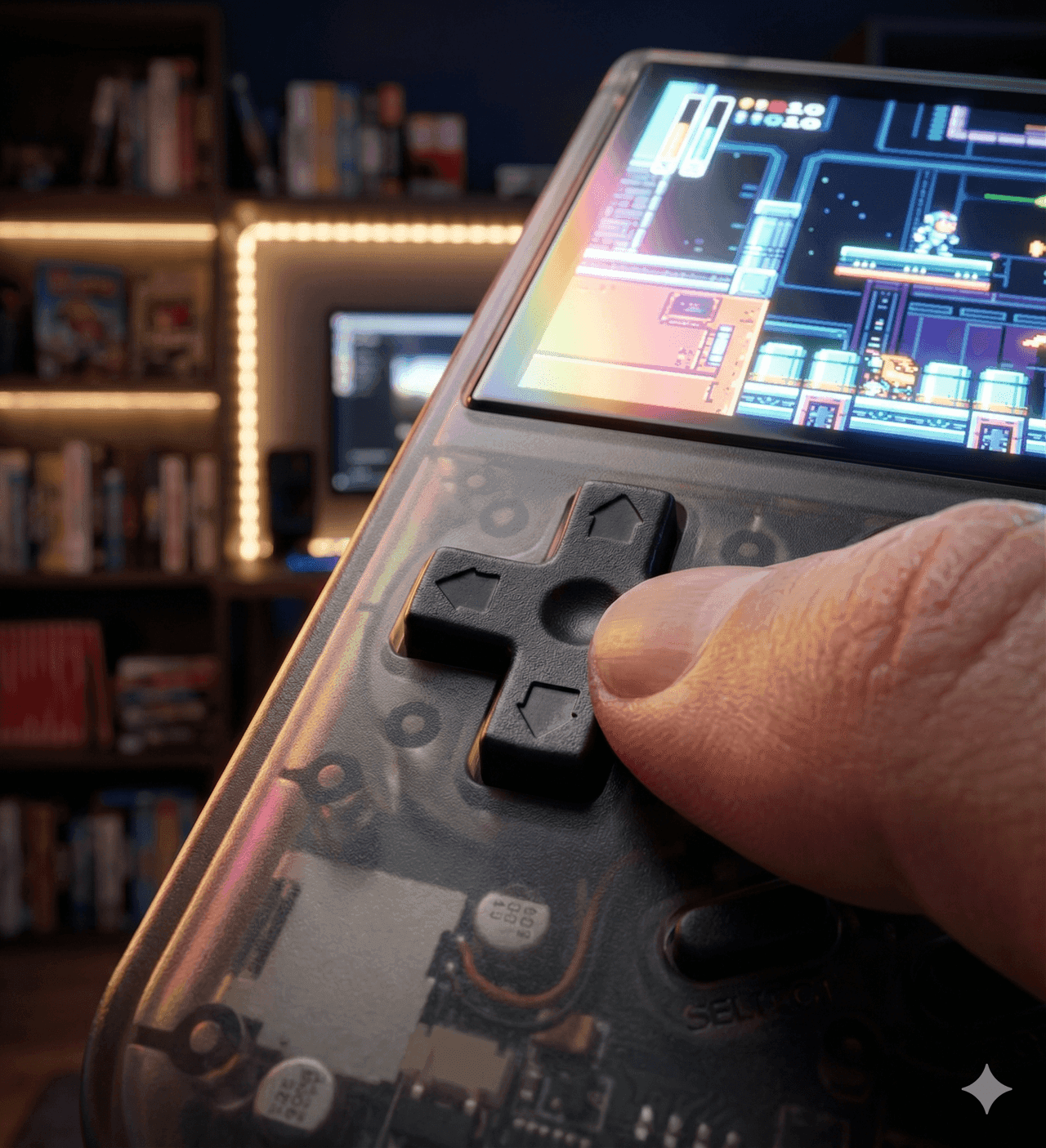
Two FPGA handhelds now play your real Game Boy, Game Boy Color, and Game Boy Advance cartridges for about the same money. The Game Bub is the open source newcomer. The Analogue Pocket is the polished veteran. Both use FPGA hardware rather than software emulation, so both are accurate and low latency. The difference is philosophy.
The Game Bub is open, hackable, and community built. The Pocket is refined, high resolution, and retail friendly. Which is right for you depends on whether you value openness or polish. Let us compare them. For background, see our FPGA vs emulation explainer.
Quick Verdict
| Game Bub | Analogue Pocket | |
|---|---|---|
| Native carts | GB, GBC, GBA | GB, GBC, GBA |
| Open source | Fully, hardware and cores | No |
| Cartridge adapters | None | Many systems |
| Community cores | Open FPGA project | openFPGA |
| Screen | 4 inch, 720x480 | 3.5 inch, very high resolution |
| Extras | Link cable, rumble, motion sensors | Adapters, optional dock |
| Sold by | Crowd Supply | Analogue, wider retail |
| Street price | Around $249 | $239 |
| Best for | Open hardware and tinkering | Polish and the best screen |
System Support
Both devices play Game Boy, Game Boy Color, and Game Boy Advance cartridges natively. That is the shared heart of this matchup, and both handle it with FPGA accuracy.
The Pocket stretches wider. Cartridge adapters add Game Gear, Neo Geo Pocket, Atari Lynx, TurboGrafx 16, and more, and the openFPGA scene adds community cores for many other systems. The Game Bub keeps its focus on the Game Boy family, though as an open project its core support can grow through the community over time.
Winner: Analogue Pocket today, on breadth. The Game Bub's open nature leaves room to close the gap.
Openness and Hackability
This is where the Game Bub pulls decisively ahead. It is fully open source. The hardware design, firmware, and FPGA cores are all public. You can study it, repair it, flash your own builds, and extend it. It even doubles as an AMD Artix 7 FPGA development platform.
The Analogue Pocket is a closed product. It is excellent, but you take it as Analogue built it. If owning, understanding, and modifying your hardware matters to you, there is no contest here.
Winner: Game Bub, by a wide margin on openness.
Screen
The Pocket's screen is legendary. Its 3.5 inch panel runs at a very high resolution, which gives razor sharp integer scaling and optional filters that mimic classic Game Boy screens. The Game Bub uses a 4 inch 720x480 IPS panel, which is a good, clear display, but not in the same resolution class.
If the sharpest possible Game Boy image is your priority, the Pocket leads clearly.
Winner: Analogue Pocket.
Extras and Accuracy
Both are accurate FPGA devices with low latency. The Game Bub adds link cable support for multiplayer with other units and original handhelds, plus rumble, an accelerometer, a gyroscope, and a real time clock for the cartridges that use them. The Pocket answers with cartridge adapters and an optional dock for TV output and controllers.
They extend in different directions. The Game Bub reaches toward faithful hardware features and multiplayer. The Pocket reaches toward more systems and the living room.
Winner: Tie, decided by which extras you want.
Availability and Support
The Analogue Pocket is sold by Analogue through wider retail channels, though stock still comes in waves. The Game Bub is sold only through Crowd Supply as a crowdfunded, community supported project. That makes the Pocket the easier device to buy and get support for, while the Game Bub asks you to buy into a grassroots effort.
Winner: Analogue Pocket on ease of purchase and support.
Price
The two land almost on top of each other. The Analogue Pocket is $239. The Game Bub is around $249, with a limited purple edition near $299. At the same money, you are not choosing on price. You are choosing on philosophy.
Winner: Tie on price. The value question is about what you want, not what you pay.
The Final Call
Choose the Game Bub if:
- You love open source hardware and want a Game Boy you can fully own and modify
- You are a developer or tinkerer drawn to the Artix 7 platform underneath
- You want link cable multiplayer and hardware level rumble and motion sensors
- You like supporting grassroots, community driven projects
Choose the Analogue Pocket if:
- You want the sharpest, highest resolution Game Boy screen
- You want cartridge adapters and the openFPGA community scene
- You may want to play on a TV with the optional dock
- You want an easier, more polished device to buy and support
For most buyers, the Analogue Pocket is the smoother, more capable pick, and the screen alone wins many people over. The Game Bub is the choice for a specific and passionate buyer, the one who wants a Game Boy that is truly open, repairable, and hackable. Both are excellent FPGA handhelds. Pick polish or openness.
The Game Bub is sold on Crowd Supply, not Amazon, so that reference is not an affiliate link.
Affiliate disclosure: This comparison contains affiliate links. As an Amazon Associate, we earn from qualifying purchases at no extra cost to you. Learn more.
Related reading
 Comparison
 ReviewComparison